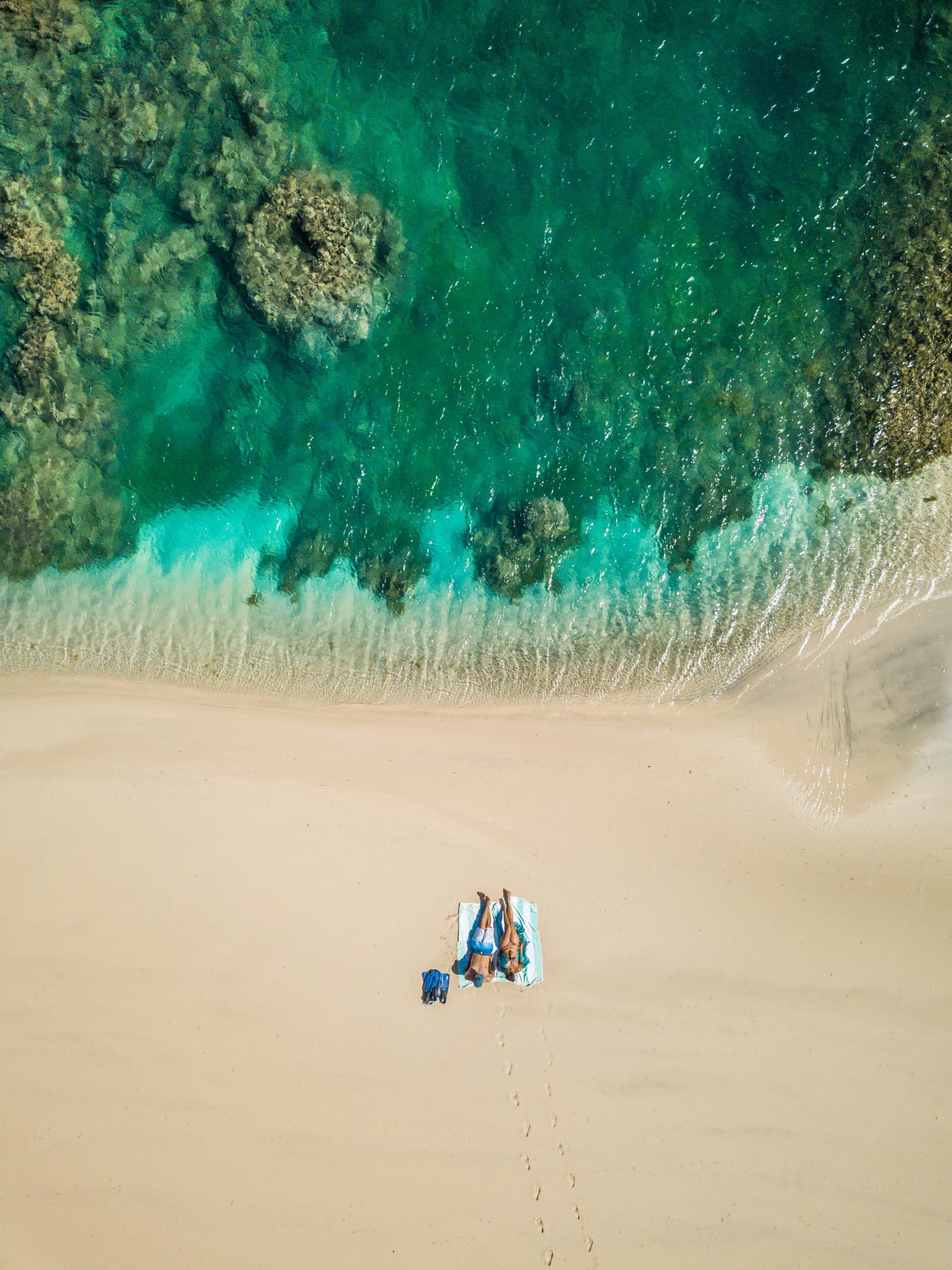

Set on a private island off Madagascar’s northeastern coast, Miavana is surrounded by the Indian Ocean, a world of its own. Yet its kitchens are connected to an extraordinary network of farmers, fishermen, markets and makers across Madagascar. It begins in the cool waters of a highland lake, among cacao trees in the northwest, at market stalls in Diego and with fishermen returning from the sea. Ingredients cross Madagascar by road and water, following a supply chain shaped as much by geography and season as by taste.

To provision Miavana is to look across an entire island for the extraordinary.
In Madagascar’s central highlands, 1,400 metres above sea level, sturgeon move through the cool, rain-fed waters of Lake Mantasoa. Here, Rova Caviar established the first sturgeon farm in Africa and the Indian Ocean, creating something entirely unexpected: Malagasy caviar. The first sturgeon arrived in 2009, beginning a decade-long journey towards the farm’s first production and bringing one of the world’s great delicacies to an extraordinary new setting.
From these misty highlands, the caviar travels north to an altogether different landscape. At Miavana, it might be served at the edge of the Indian Ocean as the last light disappears across the water, transforming one of the world’s great delicacies into something distinctly of this place.

Elsewhere, the search leads to zebu, the unmistakable humped cattle that have been part of Malagasy life for centuries. Miavana works with Bovima, which raises zebu specifically for high-quality meat, bringing carefully selected fillet, sirloin and other cuts to the island. Yet zebu is far more than simply local beef, with a deep connection to Madagascar’s landscape, culture and history. Traditionally a symbol of prosperity and family heritage, it continues to hold an important place in ceremonies and celebrations across the country, giving this ingredient a significance that reaches well beyond the plate and allowing something as familiar as a beautifully cooked steak to feel unmistakably rooted in Madagascar.
The story of zebu continues in a more unexpected form on nearby Nosy Be, where La Fideline transforms its milk into a collection of Italian-style cheeses. In a part of Madagascar where dairy production remains relatively rare, fresh mozzarella, ricotta and harder cheeses bring together local provenance and a long tradition of cheesemaking. La Fideline’s fresh zebu mozzarella might be torn through a salad or melted over a pizza straight from the Piazza oven. It is another beautiful expression of the island’s pantry, taking something familiar and giving it a character and sense of place that belongs entirely to Madagascar.

There is the same philosophy behind the chocolates found in each villa. Sambika begins with cacao grown in Madagascar, particularly the celebrated Sambirano region of the northwest, where the beans develop an intensely expressive character with notes of red berries, citrus and tropical fruit. Yet it is what happens after the cacao is harvested that makes the story remarkable.
Rather than allowing the raw ingredient to leave Madagascar before its value is realised elsewhere, Sambika transforms its cacao entirely at origin. Beans are roasted, cracked, refined, conched, tempered and moulded into chocolate on Malagasy soil.
The company has built inclusion into that process. Its predominantly female workforce includes people with disabilities, while Sambika School has trained more than 70 people in chocolate-making and production. For founder Naïma, the philosophy is beautifully simple: “The cacao was grown here, the chocolate was made here, by Malagasy hands.”

Beyond these specialist producers lies the task of everyday provisioning. In Diego, fresh produce is sought through local markets and independent growers, selected according to what is at its best. Mangoes ripen, avocados come into season, vanilla is cured, peppercorns harvested. And no pantry in Madagascar could be complete without rice. Its story here stretches back centuries, closely connected to the island’s early heritage, and Madagascar today has one of the longest traditions of rice cultivation anywhere outside Asia. Grown across almost every part of the country, rice has become inseparable from Malagasy life, eaten throughout the day and cultivated in an extraordinary variety of grains, colours and characters. At Miavana, varieties such as the delicate Madame Rose and black rice reveal just how varied this seemingly simple ingredient can be, each bringing something different to the plate. In a pantry abundant with cacao, vanilla, tropical fruit and spices, rice may be less exotic at first glance, but few ingredients carry quite so much of Madagascar’s history or are quite so deeply woven into everyday life.

The ocean brings its own abundance, but also a responsibility to choose carefully. Fresh fish comes from local fishermen, as well as boats returning to Miavana after a morning on the water, with close attention paid to both species and size. The same care extends to octopus, which is sourced according to strict seasonal restrictions and quotas that allow stocks time to recover, while mangrove crabs are caught by our neighbouring communities in the nearby mangroves and brought fresh to the island. What arrives changes with the day and the season, perhaps tuna, Spanish mackerel, dorado or snapper, allowing the kitchen to work with the surrounding ocean while being equally mindful of what should remain within it.

Bringing these ingredients together on a private island takes careful planning, with produce making its way north through Madagascar before travelling by boat across the final stretch of the Indian Ocean to Miavana. Routes, seasons, weather and freshness all play their part, and behind every delivery is a remarkable network of people ensuring that a mango chosen at market, a cut of zebu from the mainland or chocolate crafted from Sambirano cacao arrives exactly where it needs to be.
Once in Miavana’s kitchen, these ingredients are transformed once more. Much of what is served at Miavana is made here by hand, from pastries folded in the early morning and pasta rolled for dinner to ice creams churned with tropical fruit, vegetables pickled and chillies left to ferment. The team works with the seasons and with what is freshest, allowing menus to evolve around the ingredients that have made their way to the island.
It is a philosophy Group Executive Chef Anton Rautenbach captures simply: “Nature is the chef. Our role as cooks is to showcase the ingredients.”

Miavana’s pantry is, in many ways, a portrait of Madagascar: wild and cultivated, abundant and vibrant, local and seasonal, deeply traditional yet full of invention. To eat here is to encounter the island beyond the island, gathered from across a remarkable country and brought, with considerable thought and care, to the edge of the sea.
Come let us show you…
Book your island retreat with us